
The Indian equity market is set for an event-heavy week, with analysts pointing to the Reserve Bank of India's (RBI) interest rate decision, developments in the US-Iran situation, and crude oil prices as the primary determinants of market trends.

Occasionally, the silence of the night shift would be shattered by an ear-splitting alarm: 'ALERT, ALERT... This is a security warning.' We were drilled to move away from the windows and avoid the lifts, recalls Krishna Kumar NP, a veteran Dubai-based journalist.

Pakistan's Foreign Minister Ishaq Dar has called for dialogue to address the ongoing conflict in West Asia, emphasising the importance of diplomatic engagement and sustained efforts to promote peace and stability in the region.

The Cyprus Chess Federation president has criticised Indian Grandmaster Koneru Humpy's withdrawal from the Candidates Tournament, citing unfounded security concerns and disrespect for organisers and players.

Donald Trump issued a fresh warning to Iran as negotiations remained deadlocked over uranium stockpiles, sanctions relief and war compensation. The US President's sharp remarks came just hours after Iranian media revealed Washington's core conditions for resuming negotiations.

Gold prices experienced a significant drop in futures trading due to global selloff, inflation concerns, and a strong US dollar. Analysts predict a continued downward trend amid geopolitical tensions and potential rate hikes.

Indian markets on Dalal Street rallied sharply as easing tensions in the US-Iran conflict and stable oil prices boosted sentiment. Track Nifty 50 and BSE Sensex performance and key global triggers.

Amidst escalating tensions in West Asia, Iran claims to have inflicted heavy casualties on US forces in Dubai, a claim vehemently denied by the US Central Command, raising concerns about regional stability.

Hundreds of Indian seafarers are stranded on vessels carrying crude oil, LPG, and LNG in the Persian Gulf due to the ongoing conflict in the Middle East, causing disruptions to India's energy supplies.

For India, much is at stake: Crucial energy supplies traversing the Strait of Hormuz, the fate of its 10 million citizens living and working in West Asia -- who send generous remittances home -- and its major trade links with the region.

Fast-moving consumer goods (FMCG) companies like Dabur India and Marico anticipate high single-digit growth in Q4FY26, driven by strong domestic demand in India, which is helping to offset the negative impact of geopolitical conflicts in West Asia on their international businesses.

The Islamic Revolutionary Guard Corps (IRGC) has announced a series of military operations against US and Israeli targets in retaliation for earlier airstrikes. The IRGC claims to have launched multiple missile and drone strikes, and has warned against any potential ground operations within Iranian territory.

The British government has called for a negotiated solution to prevent further escalation of conflict in the Middle East following joint strikes by the US and Israel on Iran, emphasizing the safety of UK nationals and the need to prevent Iran from developing nuclear weapons.

The Beijing summit may have reduced immediate diplomatic uncertainty, but it did not resolve the deeper structural contest between the United States and China. That contest appears likely to define the coming decade, notes Varun Arya.

Double Olympic medallist PV Sindhu was stranded at Dubai airport en route to the All England Open badminton tournament due to flight suspensions caused by escalating tensions in the Middle East.

Indian stock market benchmarks Sensex and Nifty rebounded strongly after a two-day decline, driven by falling crude oil prices and positive global cues amid hopes of de-escalation in the Middle East.

Indian stock markets are expected to remain highly sensitive to geopolitical developments, particularly the US-Iran situation, and crude oil prices this week, with analysts also highlighting the influence of the rupee-dollar trend, foreign investor activity, and upcoming inflation data.

India's merchandise exports experienced a slight decrease in February, while imports surged due to increased gold and silver purchases, leading to a widened trade deficit. The West Asia crisis is expected to further impact trade in the coming months.

Indian investors have seen their wealth erode by a staggering Rs 48.29 lakh crore since the West Asia war began on February 28, leading to a significant downturn in the BSE Sensex and NSE Nifty, driven by geopolitical tensions and rising crude oil prices.

The Indian government has reduced excise duty on petrol and diesel to mitigate the impact of rising global crude prices, triggered by geopolitical tensions in the Middle East. This move aims to provide relief to consumers and oil companies amidst volatile international oil markets.

The Indian government has increased the export duty, or windfall tax, on diesel to Rs 55.5 per litre and on aviation fuel (ATF) to Rs 42 a litre, effective immediately, to boost domestic availability and prevent exporters from exploiting global price differences.
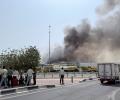
'In India, there is this first generation migrant, say from a small village in UP. He didn't go to the Gulf to buy a big house but make the life of his family better.' 'He may have paid 1 lakh rupees to an agent to go to the Gulf. Imagine what will happen to him and his family if he has to come back. He and his family will become poor again.' 'He went to the Gulf to come out of poverty, but this war will make his family trapped in poverty once again.'

The Indian rupee crashed to a record closing low against the US dollar due to rising global crude oil prices, a strengthening dollar, and geopolitical tensions in the Middle East.

The US and Iran have agreed on a roadmap aimed at reaching a final agreement within 60 days after hours-long talks at the Swiss resort of Burgenstock, mediators Qatar and Pakistan said on Monday, describing the progress as "encouraging."

Far from it; the country's resistance to the US, its nuclear ambitions, and its pursuit of influence and proxies across the Middle East are driven by a constant search for independence and security. Thus, Iran will never capitulate. Trump will learn this home truth ultimately, and it is going to be a humbling personal experience that may even destroy his presidency, predicts Ambassador M K Bhadrakumar.

The Reserve Bank of India (RBI) has debunked reports of gold sales, stating that its physical stock of gold remains unchanged at 880.52 tonnes, countering claims of selling approximately USD 12 billion to protect foreign-currency reserves.

A potential agreement between the United States and Iran, including a comprehensive ceasefire and gradual lifting of US sanctions, may be announced soon, according to reports. The agreement aims to de-escalate tensions and establish a framework for resolving disputes.

Indian benchmark equity indices, Sensex and Nifty, snapped a three-day rally, tumbling nearly 1 per cent due to heavy selling in IT stocks, a jump in crude oil prices, foreign fund outflows, and fears of prolonged instability in West Asia.

Iran has submitted a fresh proposal to regional intermediaries offering to cease its military operations in the Strait of Hormuz, contingent upon a complete cessation of hostilities and the removal of the US blockade on Iranian maritime hubs.

The report said ships must submit full documentation, obtain clearance codes and accept IRGC-escorted passage through a designated corridor.

Dabur India's stock has fallen over 17 per cent since the start of the Iran war, driven by concerns over a weak monsoon, the West Asian crisis, and rising input costs, which are expected to impact the company's revenues and margins, particularly affecting its significant rural sales and international markets.

Donald Trump says several issues were settled during the final day of talks with Xi Jinping covering trade, tariffs, and diplomacy.

The combined market valuation of four of India's top-10 most valued firms, including State Bank of India, Bharti Airtel, Tata Consultancy Services, and Larsen & Toubro, eroded by Rs 1 lakh crore last week amidst a volatile and range-bound equity market.

In a post on Truth Social, Trump used unusually harsh language to convey his message, reminding Tehran of his deadline to 'make a deal' or 'open the Strait'.

Iran's Islamic Revolutionary Guard Corps (IRGC) claims control of the Strait of Hormuz and reports striking a US destroyer, escalating tensions in the Middle East following retaliatory strikes between Iran, the US, and Israel.

Head of the Iranian Parliament's National Security Committee Ebrahim Azizi on Saturday said that Iran has prepared a "professional mechanism" to regulate maritime traffic in the Strait of Hormuz through a designated route, which will be unveiled soon.

The Pakistan Cricket Board (PCB) has announced that the initial stages of the Pakistan Super League (PSL) will be held without spectators due to regional tensions and government austerity measures.

Indian benchmark indices Sensex and Nifty closed lower in a volatile session due to profit-taking in banking and financial shares, despite earlier gains driven by easing geopolitical tensions. Analysts suggest investors remain cautious and are not aggressively chasing the recent rally.

US President Donald Trump is reportedly considering launching fresh strikes against Iran if ongoing negotiations fail to produce a peace deal, according to US media outlet Axios. This development comes as diplomatic efforts continue, with Pakistan and Qatar attempting to broker an agreement.
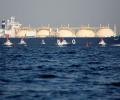
Analysts predict India will face oil price volatility and macroeconomic effects due to the escalating Iran crisis, though the country's oil supply chain is not yet structurally insecure.
